Showing posts with label South Africa. Show all posts

Thursday, January 16, 2014

The Land Before Time and After Rhinos


Yes, yes…I’ll get to Ireland, Switzerland and England posts later. In the meantime…

Baobab in Limpopo Province
I pile in the car with Sandie, Jerry and all of our gear including everything from public speaking workshop games to bat research toys. After our 2-hour flight from Cape Town, we tool away from Lanseria Airport near Johannesberg and begin our 4.5-hour drive to the Lapalala Wilderness School in an area known as the Waterberg.

This particular chunk of earth we barrel towards is estimated to be around 2.7 billion years old with the last rocks being laid down around 1.3 billion years ago. The main trades here are tobacco, cattle, game farming/trading and conservation. The three of us are here for the latter.


The Waterberg
Sandie and Jerry (AKA, the Dynamic Duo) are here on bat business. As we whiz past the post-winter, straw-colored landscape, Sandy explains that there are an estimated 60 known species of bat in South Africa and roughly 20 of those can be found in the Lapalala Reserve (36,000 hectares/139 square miles). She chirps through several Latin names and speaks of the particular qualities of roosts and bat scat. I smile, nod and realize that this woman is literally bat-shit crazy. Jerry is a retired engineer who worked for the railways in the UK. They both love dancing (a form known as ceroc), which goes quite well with Sandy’s stint in drama and Jerry’s spell as a figure skater. I can tell the 3 of us are going to be friends. And the best part? They live in my village (Greyton) for half the year.

the perks.
I learn that a select few know the number of white and black rhino in these parts, for the same reason you don’t give your credit card number to strangers or count your money in crowded public places. Poaching here is a very real concern for any reserve manager. With a single rhino horn fetching up to $60,000 per kilogram in Asian markets, reserve managers hold their cards close. As guardians of these epic giants, a fair amount of paranoia is a good thing.

But let’s take a step back. Why am I here? This goes back to my little village. In Greyton, there is a strange concentration of incredible people with legendary life experience from all over the world. One of those individuals is John Hanks. This fellow was the first Director for both the Institute of Natural Resources in KwaZulu-Natal and Peace Parks Foundation. He also has a long history dealing with the issue of rhino conservation through WWF. He is now the chairman of the Lapalala Wilderness School (LWS). Needless to say, he’s been a busy bee for the last (eh-hem) 40+ years. After several conversations, he asks me to come visit LWS in order to observe their programs and work with their small team of educator extraordinaires.

comic relief in public speaking workshop
The day after my arrival, I conduct a 4-hour workshop focused on public presentation skills, and dare I say…it was fun. It comforts me to meet outdoor educators from all over the world and hear about their perspectives. What I am discovering is that the landscape, language and culture varies, but the challenges (underpaid, overworked, khaki pants) and rewards (being in nature and getting others excited about it) are common threads with outdoor educators all over the world. We don’t do this for the money. We don’t do this because we love wearing uniforms. We do this because it (meaning hope for future generations) is just in our blood. We are not obligated; we are compelled.

Over the weekend, I tag along with the Dynamic Duo to search for signs of bat. If you know me, then you know if I am asked to go look for animal poo, I willingly oblige. We bumble and jiggle and bounce about on the trails of the reserve looking for little black, shiny bat droppings in a vast landscape of recovering wilderness. The next day, we make a day trip to the Botswana border through a colossal sea of potholes, which tossed us around like sneakers in a washing machine.
The LWS Gang
Passing through baobab country, you feel the whisper of a people and animal long passed that stored their secrets in the skin-like bark of these ancient trees. The older they get, the more the begin to hollow out from the inside, likely to make space for all the stories. I imagine the redwoods of California and the cypress trees of Iran hold the same data. The more secrets they receive, the larger, taller, or more twisted they grow in order to archive the undocumented.

Can you see the skink and the bat?
 It should be noted here that among the 3 of us, there was a dearth of silence.  Over the course of the week, we strike up conversations about (but not limited to) bat nipples, Sanskrit, recovery of dead bodies, diabetes, liabilities and lawsuits, labor unions, rhino roadblocks, handling black mambas vs. puff adders, intercostal breathing, reserve politics and poaching, the consequences of open windows, fresh muffins and motivated vervet monkeys, religious upbringings, sourcing of local meat, the dangers of white bread, baboon muggings, the history of coffee, US vs. UK colloquialisms, and zebra farts (which are apparently quite common).

On a run to Vaalwater with a willing educator-turned tour guide for the day, I have the great fortune to run into Clive Walker, Founder of the LWS and a respected and well-known conservationist in South Africa and beyond. He and his wife, Conita are having coffee outside the local supermarket. I feel awash in wisdom and life experience just simply being in the presence of these two individuals. They are soft spoken with white hair and casual clothing. As Clive graciously signs a copy of his latest book, The Rhino Keepers, Conita speaks softly of a hippo and rhino she raised. The next day, he spoke to a group of UNISA students and positively captured the room with his his presentation focused on the history and state of rhinos.

that kudu that you do.
As a teacher of public speaking, I am constantly learning from others who create magnificent recipes that capture the hearts of audiences and Clive was a master chef that day. I came here for a short consultation, but what I got was so much more. I made several new friends, learned how to say “how are you” in a language I didn’t even know existed, taught yoga to 4 willing participants, learned about the use of rhino dung as garden fertilizer, applied the brakes to allow a galloping giraffe, trotting warthog and bucking kudu to cross the road, hugged 2 conservation legends, and facilitated 8 hours worth of workshop on a subject that still terrifies me: public speaking.

Me with the Dynamic Duo, Sandie and Jerry
I sit here at the airport waiting for my flight to Cape Town. After a long absence, the sorely needed rain sheets down with accents of lightning and bellows of thunder. I imagine a white rhino and her calf somewhere nearby under the same sky, ears twitching with each drop, horned heads resting closely and calmly under an acacia. Are there poachers out today in this weather? Even if only for a moment, these two relics of a lost world find shelter in the storm from the bi-pedaled shadows that lurk and scheme under the same sky.

Monday, November 19, 2012

Mama in the Motherland

I was born under a waxing crescent moon to a single mother. I am from a small town known as Deal Island, close to Chance and Dames Quarters in Somerset County, Maryland. Cradled in the Chesapeake Bay, my hometown was frequented by pirates, most famously, Blackbeard. It has been said that I descended from a pirate known as “3-Legs McHagee” who, after becoming consumed in foraging for menhaden, was left behind by his ship. Oddly enough, my grandfather, an actor, played a character loosely based on 3-Legs in the movie, Pirates of the Caribbean
Grandfather as "Prison Dog" in Pirates of the Caribbean
Obviously I can’t prove it, but that’s the story. On the same pirate note, one of Blackbeard's ships was the Troubadour. It just so happens that my full name is Hugo Otis Troubadour, the Island Wonder Puppy, but my mom said the namesake was unintentional. Still. Legend goes that 3-Legs met and married a native girl, also abandoned by her lot. They made a life by the sea. He fished for menhaden & blue crab and she dug for oysters and razor clams. But, I digress…back to my story.

My mom was a small town girl and was likely wooed by some rich Baltimore city slicker who charmed her pants off (not that she was wearing any to begin with). Anyway, I don’t know him, but some said he was handsome.  There have been a few times when I thought I saw him—in a park,  on a Travelers Insurance commercial or passing on the street—our eyes meet briefly as if looking into a reflection, but I just kept walking and so did he.  

She became pregnant and her caretaker, the local drug dealer, made an untimely visit to prison, which left her out on the street.  She, ever brave and strong, had my siblings and me somewhere along Deal Island Road.  I guess if one is born in Deal Island, you are born on one side of Deal Island Road or the other.  Within a couple of months, I took to catching flies and digging for razor clams. Drinking from the stream was one of my favorite past times until a ornery little turtle bit the end of my nose—scared the bejesus out of me. I’m on guard every time I sip water, even out of my bowl.  And I don’t go near toilets.

We lived in the woods & wetlands for a few months and then my mom got the call. She went back to the drug dealer and we followed, as we tend to do.  Before we knew it, we were in the back of a pick-up truck headed for New Jersey to be sold, leaving my mother behind.  As she faded into the distance, I sighed and resigned myself to the bed of the truck. We stopped for fuel at Lucky’s and as my brothers and sisters milled about, I propped myself up on the wheel well as something caught my eye. It was a yellow bug—they always came out with the sunshine and I was obsessed with them. So, I hopped over the edge and chased after it into the woods. A month later, I was found behind Lucky’s, just a wee bit skinny for my own good. I discovered that the yellow bugs are immune to being caught and flies provide only small amounts of protein. I was also really thirsty, for obvious reasons.

Jamaica Pond in Jamaica Plain, MA
I spent the night in a bathroom of a nice woman’s house. The next day, her Aunt Becca opened the door and put me in her car.  We drove 8 hours to Boston and I slept the whole way.  I spent the next few days in her kitchen. On the third morning, I heard the front door open and peeped around the corner. There she was, a young woman with long brown hair and rosy cheeks, just smiling at me.  With head bowed and tail wagging, I bounded towards her. She sat down on the kitchen floor and I sat in her lap and just leaned into her, my new mom. I was home.

Me in training. This one is called "Circus".
We went for lots of walks around Jamaica Pond. She let me chase the ducks, but only sometimes. She never let me chase the white squirrel—said it was too risky—even though I have never caught a squirrel in my life. She taught me a lot of things about the difference between greeting people versus greeting dogs. She taught me how to sit, spin, hide, and how to tell between my right and left paws. She’s tried to help me work through my fear of reflective water bowls, but she understands the trauma of turtles and promised never to bring one into the house. She says that I have taught her a lot about life…about letting go, being present, savoring every treat, walking slower, running faster, dreaming loudly, and how to give more hugs. 

She has left me a couple of times claiming that it was too complicated to bring me along. And I missed her, but being the present canine I am, I just kept living and fully embracing all of those who cared for me. I spent a lot of time in Texas with my grandparents, running through bluebonnets and along the Buffalo Bayou, chasing rabbits, squirrels and herons and tiptoeing past mini mine fields of alligator gars and turtles.

My crate, which I hate.
And then, just one week ago, my grandparents put me in a crate, which was put on to a plane bound for Amsterdam.  Molly, a Bernese Mountain dog, was in the crate next to mine. We sniffed at each other through the side grates and sighed in simultaneous resignation to the present moment, which was in the cargo hold of a 737. It was her 9th flight. Her parents were in oil & gas, so she moved often, but still hated the sounds of jet engines. We talked about our families. She asked me why I was traveling to Amsterdam and I told her it was a life-long dream of mine to go on a cheese & raw herring tour. But in truth, I had no idea why I was going to Amsterdam. She said the pet hotel was a bit dark and the food sucked, but judging by her Hermes collar, I got the feeling she never spent a night in the woods in her life. I assumed the pet hotel would suit me just fine.

After a smooth landing, we were offloaded and carted to the hotel.  I spent the day there and due to some hiccup with my passport, I was informed that there would be no raw herring and cheese tour; maybe next time.

The following morning, I reluctantly entered my crate again and overheard that I was on a 12-hour flight to Cape Town, South Africa. My ears perked up and I thought; now I am on an adventure! My mom always said I was pretty perceptive and from what I could figure, I was flying over Libya, Chad, Central African Republic, Democratic Republic of the Congo, Zambia, Botswana and South Africa to be reunited with MY MOM.

I slept for most of the trip as I was next to an incredibly aloof Great Dane who insisted he was directly descended from wolves. I cocked my head politely—I didn’t have the heart (or the energy) to tell him that we were ALL descended from wolves. Sometimes you just have to let someone feel distinctive—no fur off my back. Feelings of entitlement is a pure bred thing, and that’s fine.  I also didn’t tell him I was descended from pirates as I thought he would assume I meant modern North African pirates and force an emergency landing. Prudence before pride, as my birth mother always told me.

We landed in Cape Town. It was dark and I was disoriented.  The guys in cargo were really sweet to me. One of them in particular, said “Hello Hugo” in his soothing, syrupy Xhosa accent. I couldn’t help but wag my tail at the sound of his voice. And then I heard a familiar voice. She said “Hey Buddy” and before I could see her, I knew she had come for me. As the crate slowly opened, I pushed my way out into the arms of my mama in the Motherland. And we both said, at the same time to each other: “Now I’m home."
My first pic in front of Table Mountain.

Wednesday, April 4, 2012

Southern Mozambique

As I sit here at a guesthouse nestled in the undulating farmland of Kokstad, South Africa, the dunes of Mozambique are already finding their allotted shelf space in my memory’s library.

I have spent the last month of my life meandering along the southern coast of Mozambique. Ponta do ouro (“Point of Gold”) was my home.  A sleepy little beach town just 2 km north of the South African/Mozambican border, Ponta is an interesting microcosm of culture, language, economy and environment. 


The only thing that is black and white about this place is the people.  As it stands, Ponta is home to many black Portuguese-speaking Mozambicans and a large handful of white South Africans who migrated to start businesses. There is a bit of a clog in the sink that pours money into this local economy. Being so close to the border, many tourists (and residents) do their shopping in South Africa. From drinking water to handicrafts, things tend to cost almost 3 times as much as they do across the border and this is a problem.  How can Ponta compete, grow and thrive? Tourist dollars do enter in other ways, such as accommodations, restaurant dining, diving, fishing and high levels of alcohol consumption. Think of Americans invading Cancun, Mexico during spring break.  This is Ponta during Easter. Its amazing how the death and resurrection of Christ is linked to ATV rental traffic, bikini & board short-littered beaches and the 4 teens I saw in the back of a truck…drinking beer…at 9 in the morning. Their parents were driving.  He has risen…he has risen indeed!

In a country ravaged by bitter war and devastating floods in the not-so-distant past, I was amazed at the warm, patient and peaceful demeanor of many Mozambicans. I would weave through the market and ask the mamas “Cuanto custa?” for tomatoes, onions, bananas, and okra. They would smile and reply “Vinte meticais” and they would see me look up and squeeze my brain trying to do the math from US dollars, to South African Rand to Mozambican Mets. “In Rand?” I would sheepishly ask with a smile. “Eesh, 5 Rand” they would say with a chuckle. They were patient with me and seemed curious about the white girl buying okra. Thank goodness for my Texan upbringing. Most white folk in these parts don’t know okra from a meat thermometer. I made fried okra that night with a curry I brought with me from Dominica.
Ponki Weavers, right next to the gas station
 My friends in the craft market: Altino, Dimitri, Aron & Dallas. I walked through their market stands as they each tried to politely out-compete each other for my pocket change. I bought a small wooden ring for 25 Rand. Altino didn’t have complete change for my hundred, so I said I would come back for a language lesson. I introduced myself as Sól because “Sunnye” seemed very painful for him to pronounce. I came back 2 days later with my red notebook. I learned how to say in Portuguese that I was going to the market for bread (pão), but that I would come back by for the lesson.  I came back by half an hour later and I heard “Sól! Sól!” from the shaded bench. All four of them sitting in the shade and ready to teach.  The alphabet and numbers: my favorites being the letter X, pronounced “shi-shi” and the number 10, pronounced “dezsheh”. The most controversial was how to say the phrase “How do you say…?” I loved sitting on the bench watching and listening to them argue and gesture back and forth, pointing to my notebook, taking my pen and scribbling on the paper. It was like watching a tennis match between Steffi Graf and Jennifer Capriati.


Milibangalala—one of my favorite words and places I visited. A small, remote village about a 45-minute drive north of Ponta, I stayed the night at the ranger station. Some of the rangers have taken it upon themselves to teach basic reading, writing and math to the kids in Mili.  There are anywhere from 12-18 kids ranging in age from 5-17 who make the 1.4 mile walk through the elephant reserve to the open air tent for school and basic monthly healthcare. Before I arrived, I precut squares of paper to make origami animals with the kids if the opportunity presented itself. Who knew that paper boats, swans, hearts and fish would be such a huge hit? They loved it. “Um peixe! Um peixe!” (A fish! A fish!) They said, politely pulling my pant leg to make sure I received their order. One said, “Elefante!” And I politely shrugged and said, “Eu não sei elefante.” 


The interconnectivity of land and sea was so apparent and breathtaking (especially from the privileged perspective of a helicopter). The sand reminded me of the beaches of my childhood in Galveston, Texas. However, this sand was deep and mushy like sugar and butter—impossible to run on as I quickly discovered.  Little tide pool nurseries of juvenile sergeant majors and gobies pockmarked the point, which I frequented on a daily basis. The dunes were NOT the dunes of my childhood. The dunes along the Gulf of Mexico could be traversed within seconds by a determined 6 year old and wiped out just as quickly by a hurricane. But Mozambican dunes…they are mountains, vegetated and strong, a defining element of this coastline.  Loggerhead sea turtles have been known to flipper a few dozen extra meters up the dune to make their nests on higher ground. Elephants and hippos have, on rare occasion, made their way over the dunes to take a dip in the surf.  I had a few opportunities to dip in with some of the resident bottlenose dolphins that move up and down the coast. Dolphins make me feel so…awkward and alien; reminding me that human beings will never have it completely figured out…that the world doesn’t, in fact, revolve around us. Scuba and snorkel are far cries from the grace and mobility these animals display. Clicking and circling around me at a pace I cannot pretend to keep, these “dollies” prompt me to meditate on my limitations, to embrace the exact moment I am in and to revel in this place that has allowed me inside, even if just for a moment.


Thursday, March 15, 2012

The Legend of St. Lucia (according to Cee-Cee)

Santa Lucia. St. Lucy: patron saint of the blind. I am in St. Lucia, South Africa, located in the KwaZulu-Natal Province just south of the Mozambican border.

I was talking with a woman from Holland who has lived here with her husband for the last 8 years managing a bed & breakfast.  Over several cups of coffee, I learned from her that there are only about 450 residents in St. Lucia, but during the tourist season, the population explodes to 6,000. And the face of tourism has changed over the years from that of fishermen to that of wildlife watchers and ecotourists. Some residents like this change and some do not, which is one of a few schisms that make it challenging to stand and collaborate as a unified community in the first established World Heritage Site in South Africa. 

But I am getting ahead of myself…I need to back up and explain why the face of tourism has changed.  The people changed because the environment changed.  The mouth of the estuary closed along with the prohibition of 4x4 driving on the beach. This sent most of the fisherman packing. So, in order to explain the scientific and social aspect of this place, I share with you The Abbreviated Legend of St. Lucia According to Cee-Cee.

Ten years ago, Rasmar was grazing early one morning when he felt a tingling in his horn. He grunted under heated breath, “something is different today.” But as is his nature he continued to graze; too hungry to prioritize unfounded inklings.  He had adopted a more blasé approach to life after being almost killed more times than he could count. His family had nearly been wiped out several decades before, but they made a come back and he had grown accustomed to eating in peace.

Maputa, an 11th generation patrol officer, jumped from branch to branch and fence line to fence line looking for her. Would the search never end? Losing Luz was tragic, but the process of trying to find her had become more of a religion—a sacred duty, rather than part of the job. He was tired of it. So, he occupied his mind and took a mango from Ms. Isi’s fruit bowl. “Give it back you silly monkey!” She screamed, but he hopped the fence before she could even rustle up the momentum to run.  She was large and he was quick. That poor woman refused to put her fruit bowl inside.

Crayteez, more introspective than others, surveyed the road before she barreled across.  She liked watching the mamas in the market set out their giant bags of passion fruit and avocados. She was small for her age, but it didn’t keep her from going unnoticed. Folks, especially shopkeepers didn’t look kindly on her newly acquired window-shopping habits. She attempted a slow strut although she couldn’t keep her tail from acting like a tiny spastic pendulum. “Maybe if I just graze and act casual people will stop staring”, but the paparazzi always came.  She wasn’t just a hippo.  She was a messenger, but no one seemed to get that.

You see, as with many shipwreck survivors of the 1500’s, they tend to hallucinate once they reach the shore. And Manuel was no exception. He hallucinated all sorts of talking animals. He asked for his last rites from the only priest on board (who actually died of a heart attack hours before once he realized they were sinking). In reality, Manuel was talking to a dead priest, but what he saw was an elephant-headed clergyman with kind eyes. That was the last thing he remembered before rolling ashore half naked and nearly blind.  Once he came to, there she was a luminescent vision of hope smiling down upon him. “Santa Lucia!” He exclaimed. And the rest is history.

What isn’t greatly known (especially among tourists and migrating shorebird populations) is that once ashore, Prince Vidal and Princess Luz took in Manuel. The reason it isn’t widely told is because Manuel was thought to be out of his mind in his final years (some would say for most of his years). The story that Manuel told on his deathbed was this.

Luz & Vidal were keepers of the area s ince before things were written. True, theirs was an arranged marriage due to their family’s kingdoms being next door to one another, but they loved each other and their place long before marriage was even a thought.

Princess was raised along the lake’s edge and she spent most of her youth exploring her small but unique home, which was about 43 miles long and 11 miles wide.  A stork literally delivered her.  Her mom was wading into the lake early one morning when Princess decided to come into the world.  Stork was contemplating the landscape when the Queen asked for a little help. So, the stork did what it could with its large beak, flapping wings and gangly legs to helped deliver that baby right onto the lake banks. The story goes that when she let out her first sneeze, the clouds moved and the sun came out. So, her mom named her Luz. They said that because an animal delivered her, she communed with the wildlife in a way that no one else in her kingdom ever could.  She was raised alongside young hippos and chirping baby crocs and no one was alarmed. She had a way with them.  If something across the lake caught her eye, a bird nest or what-have-you, the crocs would line up and form a bridge to the other side so she could walk along their backs to investigate. She would blow bubbles and cavort with hippos. Their favorite game was lake tag. She would chase them into the lake and they would chase her out. Some think that’s why the hippos always seem to run in and out of the water so quickly.

Prince was born on the ocean. He learned to swim before he could walk and talk. He had these endearing little scars behind his ears that he would always scratch when he was anxious or just thinking really deeply about something. His mother said the scars were from birthmarks, but most of the fishermen agree that the scars most certainly were the remnants of gills that his parents had removed by one of the local sangomas (traditional medicine healer) just after he was born. That’s the trouble with having a baby in the ocean—especially a boy. They’re just so impressionable at that age. 

Nevertheless, Prince Vidal was in the ocean more than he was on land and as a result, was fairly fluent in echolocation and song of most of the local cetaceans. He never shared what it means as he was sworn to secrecy and the bottlenose dolphins apparently threatened to “out” him as a fish to his kingdom if he ever revealed their language. It seems fair and it keeps the cetacean biologists busy, but it didn’t keep one of them, Dr. D. (as he shall be called) from harassing Prince every now and again for answers. The prince patiently told him with the utmost sincerity (as there is no sarcasm in the ocean), “If you want to know, then ask them yourself.” This always made Dr. D. drink more. In fact, he drank himself into a righteous stupor one night and turned into a mudskipper right in front of Vidal. Prince neither confirmed nor denied it, but the mudskipper population increased slightly not long after Dr. D’s disappearance.

One day, during high tide, both the prince and the princess found themselves in the estuary on opposite banks. An orphaned elephant calf with one eye accompanied her.  He was escorted by a noisy flock of 1,000 flamingos. Honestly, they would have been blind and deaf not to notice one another.  A particularly astute croc noticed this interaction and rallied some of the others to make a bridge. They did and without ever losing eye contact with him, Princess walked across. In her trance, she accidentally stepped on one of the crocs heads squishing its eye. “Ouch!” the croc cried. She paused, still not losing sight of the prince, gently massaged the croc’s eye with her big toe, and kept walking. This impressed the prince.

When she made it to the last croc back, the spellbound prince instinctively held out his hand to help Princess to shore.

“What are you doing here?” She asked quizzically, dreamy-eyed, as if she had known him for years.  “I’m clicking,” he fumbled and looked down. “I mean I’m. I mean was walking. No, I was swimming and I saw this pink blanket of birds in the sky. So, I followed them. And here I am.”

“Is this your first time to the Eastern Borderland? You look a bit lost…” she said smilingly. “No, I’ve been here a thousand times, but never to this spot,” he stated confidently. “Or, I don’t know. Maybe I have, but it was at low tide.”

In the years that followed, their romance was a secret.  Well, the wildlife knew…all 1,971 species, but no one talked.  The dune forest bush babies tried, but no one ever understood their nightly fever-berry babble. 

Arranged marriages for each of them would inevitably follow, but they tried not to focus on the future. For them, every day with each other was a gift.  He took her to swim with the dolphins and showed her secret sea turtle nests. She introduced him to the hippos and the leopards that hid in the bush.

When they finally came out with their relationship, their parents relieved the situation by indicating that the arranged marriage was to be to each other all along. They were married the next morning in the estuary close to the spot where they met. The stork performed the service.  He orated from a high branch of a white mangrove overlooking the estuary.  The couple was standing on a raft of crocs and the stork wanted nothing to do with a raft of crocs. There was a reason he had been around for so long. 

It was said that there were at least 2, 000 different kinds of animals present (including the humans). Word traveled quickly about this auspicious day so at least once representative from each species was there to witness the union.  A red-capped-robin-chat chirped a song written especially for the service and the newest hippo calf served as ring bearer adorned with a necklace of woven raffia palm to hold the rings. There were (and this is undisputed) 50,000 greater flamingoes and 500 pink-backed pelicans there. Even a palm nut vulture pair from Kosi Bay flew in for the special occasion.

Their kingdoms combined and worked in harmony for many tides.  The lake enriched the sea and the sea diversified the lake.  The estuary was a place of balance, community, life and great pride among the court.

Manuel’s story became hazy at this point.  They said he voluntarily drank an infusion of Tonga ordeal tree towards the end of his tale. He started rambling on about needing to speak with the cavefish.  The next day, he disappeared from his bed and they found only his clothes on the beach near Sodwana Bay. We don’t know all the details or circumstances of the deaths of Prince Vidal and Princess Luz, but it is said that they dwell in St. Lucia even now.

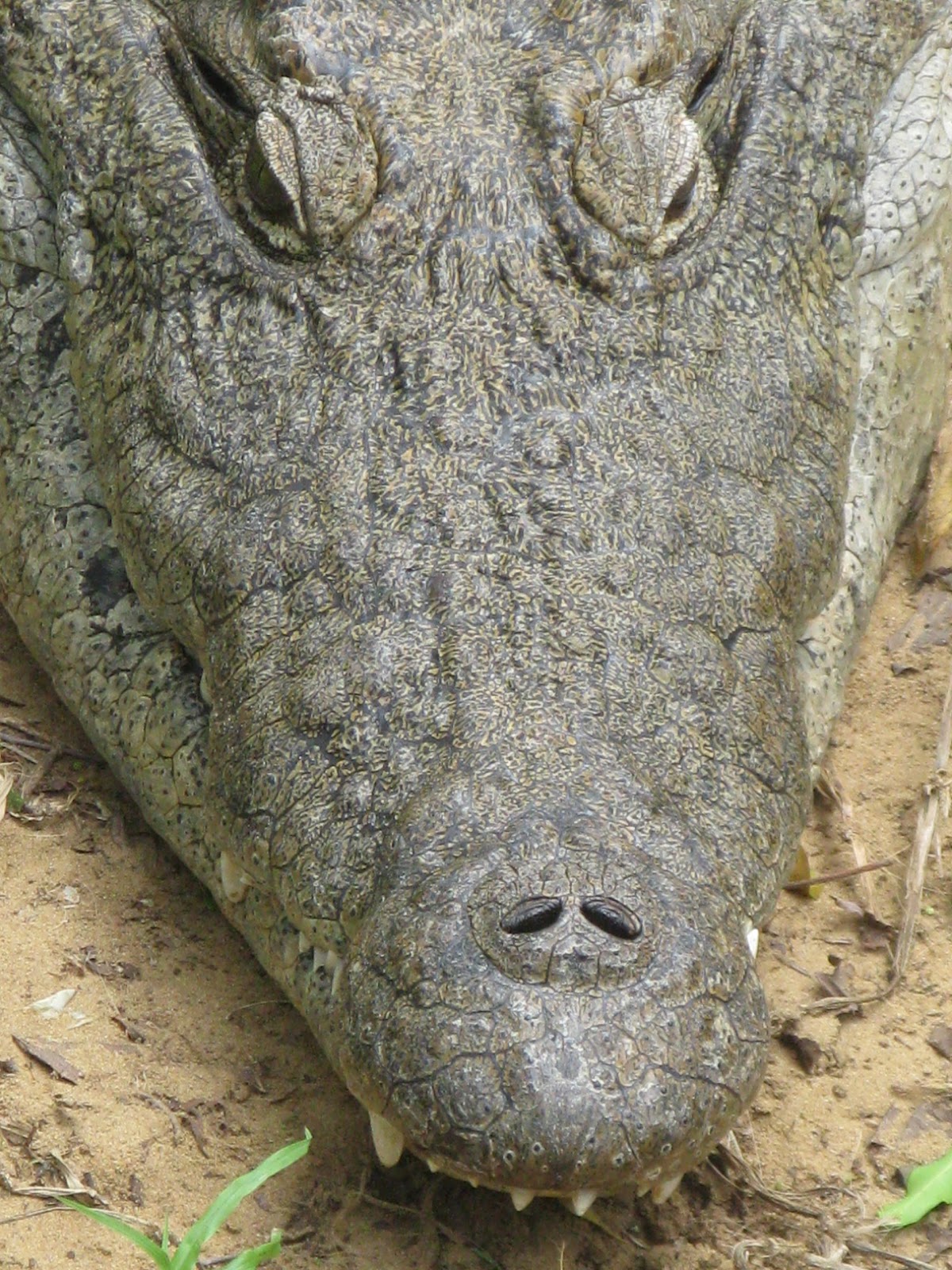
In 1951, alien pine and gum tree plantations were erected near the lake and estuary and not long after, water levels started to diminish.  Ten years ago, the Lake St. Lucia was permanently cut off from the sea.  Cyclones have come and gone and they say that each storm is a love letter from Vidal to Luz. He misses her and cannot stand to be apart from her. So, he sends waves to reach into the estuary to find her and be with her again. She went missing and they say that every time a hippo comes to town, it is carrying a message from Vidal to ask about Luz’s whereabouts, but he didn’t anticipate that they would make such intimidating messengers. How was he to know that they would become so obstinate towards humans after her disappearance?

And who am I, you ask? How do I know all of this? Well, my name is Cee-Cee.   I was with Manuel when he died and he told this story to me.  I had been a fairly secretive resident of St. Lucia until about 10 years ago. I remember the day quite well. I woke up that morning to a strong surge in my lateral line; so strong it made my ancient scales stand on end.  It wasn’t the first time I had this sensation. The surge is legendary among my kind. Coelacanths have been around for ages and my ancestors passed down a particularly sensitive lateral line. Sometimes we stand on our heads to relieve the pressure. During this particular surge, I remembered my great grandmother’s words that she shared with her years before. “Cee-Cee, life is lonely and dark for us, but you will live in the light one day.” I didn’t understand what she meant because I love the darkness. It’s easier to keep all my secrets down here. We live in caves during the day and hunt at night. We’re like underwater bats and we like it this way. But I knew enough not to question my Great Gran as she tended to be mostly right 100% of the time. And she was right. A group of adventurous divers found me one day at about 350 feet. They never took a picture and I never saw them again, but I hear they took some footage of my cousins. Anyway, after being spotted, I thought, “well, they came all this way, I might as well share at least one of my secrets.”


Saturday, February 4, 2012

A Beginner's Mind

 
Shoshin, or “beginner’s mind” is a Zen Buddhist thing. I love the IDEA of it. Erase your mind of all preconceptions and just start with a blank slate in your new place, whether physical, mental or in my case, both. Embracing the Beginner’s Mind in practice is tough for me.  I have tumors of pride lodged in my throat and stomach that make shoshin hard to swallow and digest.

I have been in Cape Town, South Africa for 11 days and my shoshin is all over the place. Here are some snippets:

  • Home Security: coming and going from any house is a production involving gates, locks, alarm codes, curtains and then double checking it all to make sure you didn’t forget anything.

  • Mobility: I am learning how to drive a manual 4 x 4, driver’s side on the right and driving on the left. Doors locked at stoplights (for human opportunists) and in national parks (for baboon opportunists). I joined a gym since running (as a lone female) is a little complicated. I went for the first time yesterday and it’s been a while since I’ve been exposed to gym (moreover Ladies lockeroom) culture. I saw a woman sitting on a bench texting madly and completely naked. Shoshin, shoshin, shoshin.

  • Food: Woolworth’s or “Woolies” is foodmarket oasis for me. I feel happiest in the bakery, cheese, and wine sections. Lots of organic options. Many of the Woolies are also department stores, so you can potentially put your sheets and meats and shoes and booze in the same cart. I got a bread maker and some other kitchen goodies, so I am cooking and baking a lot. Sol Café is my imaginary restaurant and bakery. I am the head chef, sous chef and busgirl. Today, I went to a market in Woodstock that had everything from springbok burgers to handmade dinosaur plushies. I watched a young man at the “New York Bagels” vendor mindfully paint the cream cheese onto each crusty bagel canvas. The line was long, but I enjoyed watching him.

  • People: 4 million of South Africa’s 50 million of Africa’s 1 billion live in Cape Town. Black (mostly Xhosa), White (Afrikaner, German, French), Colored (Cape Malay), Asian (Chinese, Indian). If you think you know what a South African looks like, you don’t. Coined by Nelson Mandela as the Rainbow Nation, South Africans defy stereotypes and homogeneity. 

  • Entertainment: I went to go see a movie last night and when you purchase your tickets, you actually pick out your seat on the computer screen (like a concert) before you go in.  The Waterfront is a bustling and safe place day and night. Shops, restaurants, stages, and a giant ferris wheel line the harbor. It’s Cape Town’s own Faneuil Hall/Quincy Market.

  • Animals: Hadeda Ibis calls I can hear throughout the day. At Cape Point, the Chacma baboons are beautiful, yet opportunistic, but there is one troop that is not habituated to humans, so I didn’t have to worry so much about them approaching me and taking whatever I had. Ostriches and bontebok (antelope) sunbathing and foraging on the beaches, cormorants flooding the rocks at Cape of Good Hope and angulate tortoises trekking conservatively along the side of the road.

  • Landscape: I see Table Mountain, Lion’s Head and Devil’s Peak every day. They are all good reference points for orienteering around the city. Clouds seem to drape over Table Mountain in what is knows as the “tablecloth”.  Wind—there is plenty of it. I have to make sure that if I am wearing a cute skirt or dress, I am also wearing cute underwear because you just never know when the wind might put all of you apparel on public display.

And with that, I leave you all to embrace a Beginner’s Mind with something. Is there anything that your pride or need for expertise keeps you from learning or trying? I could probably make a list of 10 new things every day. May the Shoshin be with you.