Wednesday, April 4, 2012

Southern Mozambique

As I sit here at a guesthouse nestled in the undulating farmland of Kokstad, South Africa, the dunes of Mozambique are already finding their allotted shelf space in my memory’s library.

I have spent the last month of my life meandering along the southern coast of Mozambique. Ponta do ouro (“Point of Gold”) was my home.  A sleepy little beach town just 2 km north of the South African/Mozambican border, Ponta is an interesting microcosm of culture, language, economy and environment. 


The only thing that is black and white about this place is the people.  As it stands, Ponta is home to many black Portuguese-speaking Mozambicans and a large handful of white South Africans who migrated to start businesses. There is a bit of a clog in the sink that pours money into this local economy. Being so close to the border, many tourists (and residents) do their shopping in South Africa. From drinking water to handicrafts, things tend to cost almost 3 times as much as they do across the border and this is a problem.  How can Ponta compete, grow and thrive? Tourist dollars do enter in other ways, such as accommodations, restaurant dining, diving, fishing and high levels of alcohol consumption. Think of Americans invading Cancun, Mexico during spring break.  This is Ponta during Easter. Its amazing how the death and resurrection of Christ is linked to ATV rental traffic, bikini & board short-littered beaches and the 4 teens I saw in the back of a truck…drinking beer…at 9 in the morning. Their parents were driving.  He has risen…he has risen indeed!

In a country ravaged by bitter war and devastating floods in the not-so-distant past, I was amazed at the warm, patient and peaceful demeanor of many Mozambicans. I would weave through the market and ask the mamas “Cuanto custa?” for tomatoes, onions, bananas, and okra. They would smile and reply “Vinte meticais” and they would see me look up and squeeze my brain trying to do the math from US dollars, to South African Rand to Mozambican Mets. “In Rand?” I would sheepishly ask with a smile. “Eesh, 5 Rand” they would say with a chuckle. They were patient with me and seemed curious about the white girl buying okra. Thank goodness for my Texan upbringing. Most white folk in these parts don’t know okra from a meat thermometer. I made fried okra that night with a curry I brought with me from Dominica.
Ponki Weavers, right next to the gas station
 My friends in the craft market: Altino, Dimitri, Aron & Dallas. I walked through their market stands as they each tried to politely out-compete each other for my pocket change. I bought a small wooden ring for 25 Rand. Altino didn’t have complete change for my hundred, so I said I would come back for a language lesson. I introduced myself as Sól because “Sunnye” seemed very painful for him to pronounce. I came back 2 days later with my red notebook. I learned how to say in Portuguese that I was going to the market for bread (pão), but that I would come back by for the lesson.  I came back by half an hour later and I heard “Sól! Sól!” from the shaded bench. All four of them sitting in the shade and ready to teach.  The alphabet and numbers: my favorites being the letter X, pronounced “shi-shi” and the number 10, pronounced “dezsheh”. The most controversial was how to say the phrase “How do you say…?” I loved sitting on the bench watching and listening to them argue and gesture back and forth, pointing to my notebook, taking my pen and scribbling on the paper. It was like watching a tennis match between Steffi Graf and Jennifer Capriati.


Milibangalala—one of my favorite words and places I visited. A small, remote village about a 45-minute drive north of Ponta, I stayed the night at the ranger station. Some of the rangers have taken it upon themselves to teach basic reading, writing and math to the kids in Mili.  There are anywhere from 12-18 kids ranging in age from 5-17 who make the 1.4 mile walk through the elephant reserve to the open air tent for school and basic monthly healthcare. Before I arrived, I precut squares of paper to make origami animals with the kids if the opportunity presented itself. Who knew that paper boats, swans, hearts and fish would be such a huge hit? They loved it. “Um peixe! Um peixe!” (A fish! A fish!) They said, politely pulling my pant leg to make sure I received their order. One said, “Elefante!” And I politely shrugged and said, “Eu não sei elefante.” 


The interconnectivity of land and sea was so apparent and breathtaking (especially from the privileged perspective of a helicopter). The sand reminded me of the beaches of my childhood in Galveston, Texas. However, this sand was deep and mushy like sugar and butter—impossible to run on as I quickly discovered.  Little tide pool nurseries of juvenile sergeant majors and gobies pockmarked the point, which I frequented on a daily basis. The dunes were NOT the dunes of my childhood. The dunes along the Gulf of Mexico could be traversed within seconds by a determined 6 year old and wiped out just as quickly by a hurricane. But Mozambican dunes…they are mountains, vegetated and strong, a defining element of this coastline.  Loggerhead sea turtles have been known to flipper a few dozen extra meters up the dune to make their nests on higher ground. Elephants and hippos have, on rare occasion, made their way over the dunes to take a dip in the surf.  I had a few opportunities to dip in with some of the resident bottlenose dolphins that move up and down the coast. Dolphins make me feel so…awkward and alien; reminding me that human beings will never have it completely figured out…that the world doesn’t, in fact, revolve around us. Scuba and snorkel are far cries from the grace and mobility these animals display. Clicking and circling around me at a pace I cannot pretend to keep, these “dollies” prompt me to meditate on my limitations, to embrace the exact moment I am in and to revel in this place that has allowed me inside, even if just for a moment.


Thursday, March 15, 2012

The Legend of St. Lucia (according to Cee-Cee)

Santa Lucia. St. Lucy: patron saint of the blind. I am in St. Lucia, South Africa, located in the KwaZulu-Natal Province just south of the Mozambican border.

I was talking with a woman from Holland who has lived here with her husband for the last 8 years managing a bed & breakfast.  Over several cups of coffee, I learned from her that there are only about 450 residents in St. Lucia, but during the tourist season, the population explodes to 6,000. And the face of tourism has changed over the years from that of fishermen to that of wildlife watchers and ecotourists. Some residents like this change and some do not, which is one of a few schisms that make it challenging to stand and collaborate as a unified community in the first established World Heritage Site in South Africa. 

But I am getting ahead of myself…I need to back up and explain why the face of tourism has changed.  The people changed because the environment changed.  The mouth of the estuary closed along with the prohibition of 4x4 driving on the beach. This sent most of the fisherman packing. So, in order to explain the scientific and social aspect of this place, I share with you The Abbreviated Legend of St. Lucia According to Cee-Cee.

Ten years ago, Rasmar was grazing early one morning when he felt a tingling in his horn. He grunted under heated breath, “something is different today.” But as is his nature he continued to graze; too hungry to prioritize unfounded inklings.  He had adopted a more blasé approach to life after being almost killed more times than he could count. His family had nearly been wiped out several decades before, but they made a come back and he had grown accustomed to eating in peace.

Maputa, an 11th generation patrol officer, jumped from branch to branch and fence line to fence line looking for her. Would the search never end? Losing Luz was tragic, but the process of trying to find her had become more of a religion—a sacred duty, rather than part of the job. He was tired of it. So, he occupied his mind and took a mango from Ms. Isi’s fruit bowl. “Give it back you silly monkey!” She screamed, but he hopped the fence before she could even rustle up the momentum to run.  She was large and he was quick. That poor woman refused to put her fruit bowl inside.

Crayteez, more introspective than others, surveyed the road before she barreled across.  She liked watching the mamas in the market set out their giant bags of passion fruit and avocados. She was small for her age, but it didn’t keep her from going unnoticed. Folks, especially shopkeepers didn’t look kindly on her newly acquired window-shopping habits. She attempted a slow strut although she couldn’t keep her tail from acting like a tiny spastic pendulum. “Maybe if I just graze and act casual people will stop staring”, but the paparazzi always came.  She wasn’t just a hippo.  She was a messenger, but no one seemed to get that.

You see, as with many shipwreck survivors of the 1500’s, they tend to hallucinate once they reach the shore. And Manuel was no exception. He hallucinated all sorts of talking animals. He asked for his last rites from the only priest on board (who actually died of a heart attack hours before once he realized they were sinking). In reality, Manuel was talking to a dead priest, but what he saw was an elephant-headed clergyman with kind eyes. That was the last thing he remembered before rolling ashore half naked and nearly blind.  Once he came to, there she was a luminescent vision of hope smiling down upon him. “Santa Lucia!” He exclaimed. And the rest is history.

What isn’t greatly known (especially among tourists and migrating shorebird populations) is that once ashore, Prince Vidal and Princess Luz took in Manuel. The reason it isn’t widely told is because Manuel was thought to be out of his mind in his final years (some would say for most of his years). The story that Manuel told on his deathbed was this.

Luz & Vidal were keepers of the area s ince before things were written. True, theirs was an arranged marriage due to their family’s kingdoms being next door to one another, but they loved each other and their place long before marriage was even a thought.

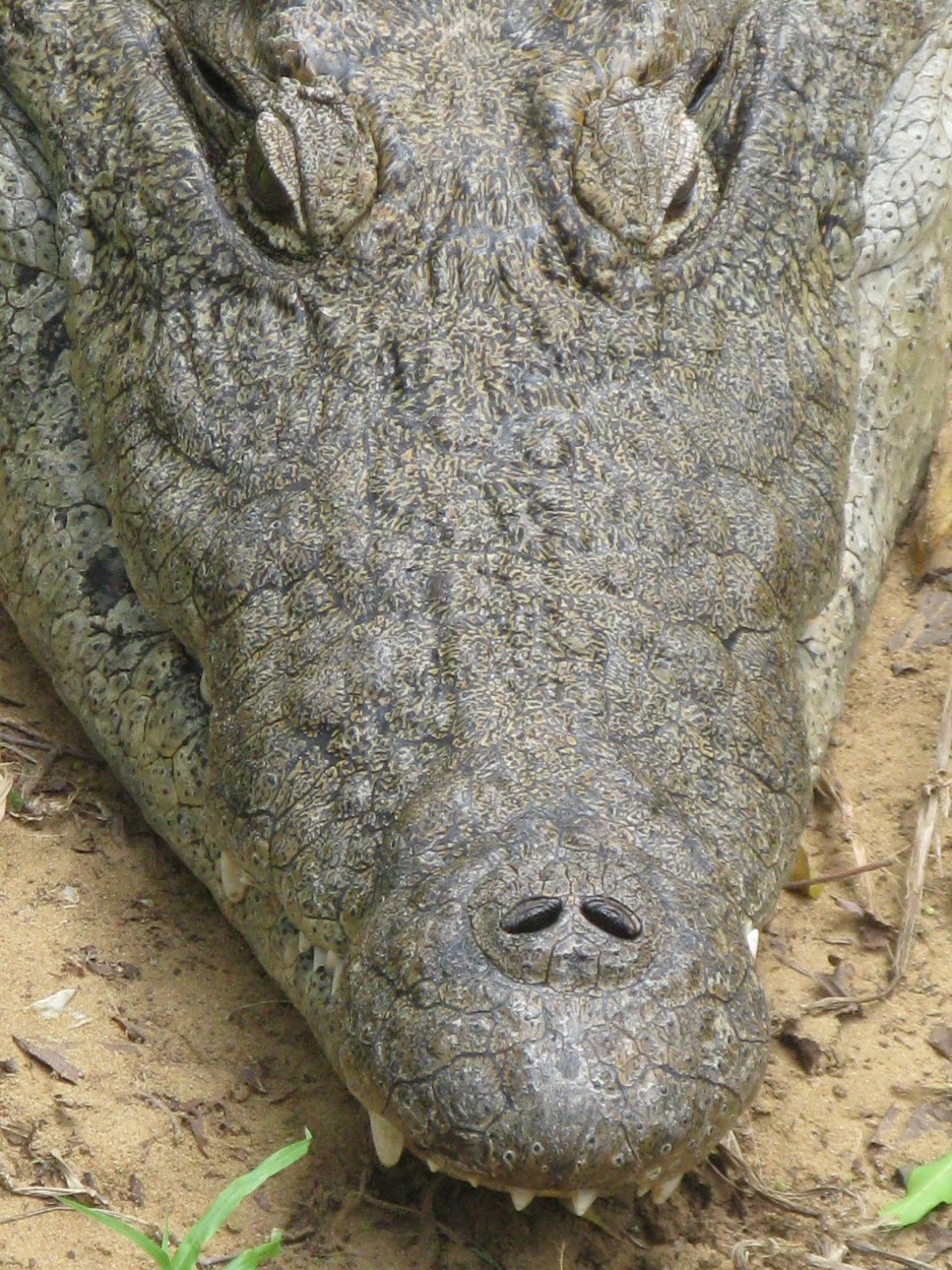
Princess was raised along the lake’s edge and she spent most of her youth exploring her small but unique home, which was about 43 miles long and 11 miles wide.  A stork literally delivered her.  Her mom was wading into the lake early one morning when Princess decided to come into the world.  Stork was contemplating the landscape when the Queen asked for a little help. So, the stork did what it could with its large beak, flapping wings and gangly legs to helped deliver that baby right onto the lake banks. The story goes that when she let out her first sneeze, the clouds moved and the sun came out. So, her mom named her Luz. They said that because an animal delivered her, she communed with the wildlife in a way that no one else in her kingdom ever could.  She was raised alongside young hippos and chirping baby crocs and no one was alarmed. She had a way with them.  If something across the lake caught her eye, a bird nest or what-have-you, the crocs would line up and form a bridge to the other side so she could walk along their backs to investigate. She would blow bubbles and cavort with hippos. Their favorite game was lake tag. She would chase them into the lake and they would chase her out. Some think that’s why the hippos always seem to run in and out of the water so quickly.

Prince was born on the ocean. He learned to swim before he could walk and talk. He had these endearing little scars behind his ears that he would always scratch when he was anxious or just thinking really deeply about something. His mother said the scars were from birthmarks, but most of the fishermen agree that the scars most certainly were the remnants of gills that his parents had removed by one of the local sangomas (traditional medicine healer) just after he was born. That’s the trouble with having a baby in the ocean—especially a boy. They’re just so impressionable at that age. 

Nevertheless, Prince Vidal was in the ocean more than he was on land and as a result, was fairly fluent in echolocation and song of most of the local cetaceans. He never shared what it means as he was sworn to secrecy and the bottlenose dolphins apparently threatened to “out” him as a fish to his kingdom if he ever revealed their language. It seems fair and it keeps the cetacean biologists busy, but it didn’t keep one of them, Dr. D. (as he shall be called) from harassing Prince every now and again for answers. The prince patiently told him with the utmost sincerity (as there is no sarcasm in the ocean), “If you want to know, then ask them yourself.” This always made Dr. D. drink more. In fact, he drank himself into a righteous stupor one night and turned into a mudskipper right in front of Vidal. Prince neither confirmed nor denied it, but the mudskipper population increased slightly not long after Dr. D’s disappearance.

One day, during high tide, both the prince and the princess found themselves in the estuary on opposite banks. An orphaned elephant calf with one eye accompanied her.  He was escorted by a noisy flock of 1,000 flamingos. Honestly, they would have been blind and deaf not to notice one another.  A particularly astute croc noticed this interaction and rallied some of the others to make a bridge. They did and without ever losing eye contact with him, Princess walked across. In her trance, she accidentally stepped on one of the crocs heads squishing its eye. “Ouch!” the croc cried. She paused, still not losing sight of the prince, gently massaged the croc’s eye with her big toe, and kept walking. This impressed the prince.

When she made it to the last croc back, the spellbound prince instinctively held out his hand to help Princess to shore.

“What are you doing here?” She asked quizzically, dreamy-eyed, as if she had known him for years.  “I’m clicking,” he fumbled and looked down. “I mean I’m. I mean was walking. No, I was swimming and I saw this pink blanket of birds in the sky. So, I followed them. And here I am.”

“Is this your first time to the Eastern Borderland? You look a bit lost…” she said smilingly. “No, I’ve been here a thousand times, but never to this spot,” he stated confidently. “Or, I don’t know. Maybe I have, but it was at low tide.”

In the years that followed, their romance was a secret.  Well, the wildlife knew…all 1,971 species, but no one talked.  The dune forest bush babies tried, but no one ever understood their nightly fever-berry babble. 

Arranged marriages for each of them would inevitably follow, but they tried not to focus on the future. For them, every day with each other was a gift.  He took her to swim with the dolphins and showed her secret sea turtle nests. She introduced him to the hippos and the leopards that hid in the bush.

When they finally came out with their relationship, their parents relieved the situation by indicating that the arranged marriage was to be to each other all along. They were married the next morning in the estuary close to the spot where they met. The stork performed the service.  He orated from a high branch of a white mangrove overlooking the estuary.  The couple was standing on a raft of crocs and the stork wanted nothing to do with a raft of crocs. There was a reason he had been around for so long. 

It was said that there were at least 2, 000 different kinds of animals present (including the humans). Word traveled quickly about this auspicious day so at least once representative from each species was there to witness the union.  A red-capped-robin-chat chirped a song written especially for the service and the newest hippo calf served as ring bearer adorned with a necklace of woven raffia palm to hold the rings. There were (and this is undisputed) 50,000 greater flamingoes and 500 pink-backed pelicans there. Even a palm nut vulture pair from Kosi Bay flew in for the special occasion.

Their kingdoms combined and worked in harmony for many tides.  The lake enriched the sea and the sea diversified the lake.  The estuary was a place of balance, community, life and great pride among the court.

Manuel’s story became hazy at this point.  They said he voluntarily drank an infusion of Tonga ordeal tree towards the end of his tale. He started rambling on about needing to speak with the cavefish.  The next day, he disappeared from his bed and they found only his clothes on the beach near Sodwana Bay. We don’t know all the details or circumstances of the deaths of Prince Vidal and Princess Luz, but it is said that they dwell in St. Lucia even now.

In 1951, alien pine and gum tree plantations were erected near the lake and estuary and not long after, water levels started to diminish.  Ten years ago, the Lake St. Lucia was permanently cut off from the sea.  Cyclones have come and gone and they say that each storm is a love letter from Vidal to Luz. He misses her and cannot stand to be apart from her. So, he sends waves to reach into the estuary to find her and be with her again. She went missing and they say that every time a hippo comes to town, it is carrying a message from Vidal to ask about Luz’s whereabouts, but he didn’t anticipate that they would make such intimidating messengers. How was he to know that they would become so obstinate towards humans after her disappearance?

And who am I, you ask? How do I know all of this? Well, my name is Cee-Cee.   I was with Manuel when he died and he told this story to me.  I had been a fairly secretive resident of St. Lucia until about 10 years ago. I remember the day quite well. I woke up that morning to a strong surge in my lateral line; so strong it made my ancient scales stand on end.  It wasn’t the first time I had this sensation. The surge is legendary among my kind. Coelacanths have been around for ages and my ancestors passed down a particularly sensitive lateral line. Sometimes we stand on our heads to relieve the pressure. During this particular surge, I remembered my great grandmother’s words that she shared with her years before. “Cee-Cee, life is lonely and dark for us, but you will live in the light one day.” I didn’t understand what she meant because I love the darkness. It’s easier to keep all my secrets down here. We live in caves during the day and hunt at night. We’re like underwater bats and we like it this way. But I knew enough not to question my Great Gran as she tended to be mostly right 100% of the time. And she was right. A group of adventurous divers found me one day at about 350 feet. They never took a picture and I never saw them again, but I hear they took some footage of my cousins. Anyway, after being spotted, I thought, “well, they came all this way, I might as well share at least one of my secrets.”


Saturday, February 4, 2012

A Beginner's Mind

 
Shoshin, or “beginner’s mind” is a Zen Buddhist thing. I love the IDEA of it. Erase your mind of all preconceptions and just start with a blank slate in your new place, whether physical, mental or in my case, both. Embracing the Beginner’s Mind in practice is tough for me.  I have tumors of pride lodged in my throat and stomach that make shoshin hard to swallow and digest.

I have been in Cape Town, South Africa for 11 days and my shoshin is all over the place. Here are some snippets:

  • Home Security: coming and going from any house is a production involving gates, locks, alarm codes, curtains and then double checking it all to make sure you didn’t forget anything.

  • Mobility: I am learning how to drive a manual 4 x 4, driver’s side on the right and driving on the left. Doors locked at stoplights (for human opportunists) and in national parks (for baboon opportunists). I joined a gym since running (as a lone female) is a little complicated. I went for the first time yesterday and it’s been a while since I’ve been exposed to gym (moreover Ladies lockeroom) culture. I saw a woman sitting on a bench texting madly and completely naked. Shoshin, shoshin, shoshin.

  • Food: Woolworth’s or “Woolies” is foodmarket oasis for me. I feel happiest in the bakery, cheese, and wine sections. Lots of organic options. Many of the Woolies are also department stores, so you can potentially put your sheets and meats and shoes and booze in the same cart. I got a bread maker and some other kitchen goodies, so I am cooking and baking a lot. Sol Café is my imaginary restaurant and bakery. I am the head chef, sous chef and busgirl. Today, I went to a market in Woodstock that had everything from springbok burgers to handmade dinosaur plushies. I watched a young man at the “New York Bagels” vendor mindfully paint the cream cheese onto each crusty bagel canvas. The line was long, but I enjoyed watching him.

  • People: 4 million of South Africa’s 50 million of Africa’s 1 billion live in Cape Town. Black (mostly Xhosa), White (Afrikaner, German, French), Colored (Cape Malay), Asian (Chinese, Indian). If you think you know what a South African looks like, you don’t. Coined by Nelson Mandela as the Rainbow Nation, South Africans defy stereotypes and homogeneity. 

  • Entertainment: I went to go see a movie last night and when you purchase your tickets, you actually pick out your seat on the computer screen (like a concert) before you go in.  The Waterfront is a bustling and safe place day and night. Shops, restaurants, stages, and a giant ferris wheel line the harbor. It’s Cape Town’s own Faneuil Hall/Quincy Market.

  • Animals: Hadeda Ibis calls I can hear throughout the day. At Cape Point, the Chacma baboons are beautiful, yet opportunistic, but there is one troop that is not habituated to humans, so I didn’t have to worry so much about them approaching me and taking whatever I had. Ostriches and bontebok (antelope) sunbathing and foraging on the beaches, cormorants flooding the rocks at Cape of Good Hope and angulate tortoises trekking conservatively along the side of the road.

  • Landscape: I see Table Mountain, Lion’s Head and Devil’s Peak every day. They are all good reference points for orienteering around the city. Clouds seem to drape over Table Mountain in what is knows as the “tablecloth”.  Wind—there is plenty of it. I have to make sure that if I am wearing a cute skirt or dress, I am also wearing cute underwear because you just never know when the wind might put all of you apparel on public display.

And with that, I leave you all to embrace a Beginner’s Mind with something. Is there anything that your pride or need for expertise keeps you from learning or trying? I could probably make a list of 10 new things every day. May the Shoshin be with you.


Friday, January 6, 2012

Detroit to Dominica


Trafalgar Falls

“I have seen you somewhere before.”
“Oh yeah?” I say. “Where?”
“Either Canada…or Detroit.” He says.

Let me preface my next response by saying that I really don’t like making statements about a place I’ve never been…

“Well, you have not met me in Detroit. Nor will you ever meet me in Detroit.”
“Too violent?” He says.
“No, not too violent, it’s just…its Detroit. It has never been on my list of places to go.”

And then I felt bad. I thought about all the times people from New England said, “Houston, TX? I don’t think I’ll ever visit there. If I visit Texas AT ALL, it will be Austin.” Grrrrrrrr.

He stared at me blankly and then smiled.

This was one of my first conversations with Gilbert of Dominica. I was in that familiar yet foreign and surreal state of arriving in a new country, alone, exhausted and at night. 

For those of you who know nothing of Dominica, here are some basics.  It claims to be one of the most rugged islands in the Caribbean. And just from what I have seen in the last 24 hours, I agree. This is not the white-sand limestone, beachy plains and blue holes of the Bahamas. It is not the Sandals resorts or country buses of Jamaica. It isn’t the lobster and conch fishing communities of the Turks & Caicos. It isn’t the Spanish-speaking, German tourist-flooded streets of Sosua in the Dominican Republic. These Dominicans are different from those Dominicans.
Emerald Pool

Dominica, in my opinion, is the supermodel of the Caribbean islands.
No, wait—that’s Eleuthera, Bahamas.
Dominica is more like the youthful Marilyn Monroe of the Caribbean islands.
She is breathtakingly gorgeous, politically tangled, beautifully rugged, hot, gushing with energy, welcoming, layered, moody, curvy (so curvy you get motion sickness just looking at her), and maybe just a wee bit volatile and deep.

From Capuchin in the North to Scotts Head in the South, and from Colihaut in the West to St. Cyr in the East, Dominica is about 25 miles x 12 miles at it’s longest and widest bits.

The population of Dominica is 71,000, with about 20% of the population residing in the southwestern capital of Roseau. Sperm whales hang out here all year along with 22 or so other cetaceans that come and go from the area. There is no golf course from what I can gather.  And even I know that this is a big deal in the Caribbean. Even Eleuthera has at least the carcass of a failed golf course. 

There is a lodge (Cocoa cottages) centered around…chocolate.  There is a guided organic mushroom farm tour. Hiking here is as essential as going to a Red Sox game at Fenway Park when in Boston. Mountains, 365 rivers, waterfalls, boiling lakes, sulfur hot springs, orchid and bromeliad-littered rainforests, and fantastic people. I might never leave.

And yet…

And yet, Dominica hosts very few extended-stay tourists (75,000 per year). What they do serve are over 500,000 cruise-ship tourists per year. But these 75,000 pack a bigger punch as they spend over 3 times as much money as the half a million “shippies”.

This island has so much to teach the world. I have no idea what all of these things are because I have only been here for 40 hours, but I just know there are piles of wisdom; in the people, in the landscape, in the ocean, along the endlessly winding roads…I feel it in my gut…along with the motion sickness.

Tuesday, December 27, 2011

Snap

La Quinta in Daphne, Alabama


A little over two years ago, something in me snapped.

When something or someone snaps, it is implied to be unfortunate and often inevitable.
For several reasons, my life unfolded and as terrifying and so indescribably painful as it was, it just needed to happen. Inevitable, yes. Unfortunate, no.

Think about the mechanics of a snap (on a shirt or with your fingers). A certain amount of force must be applied in order for it to work. Once the force is applied, it gives way to sound...to a connection.

So, that's it. I snapped.

Once this happened, everything changed. My self perception and really my entire worldview shifted. I discovered that most of my time was spent straddling The Present Fence by lamenting the past or wringing my hands over the future.

I am trying (very hard) to walk the line of Today. Keeping an ear to the past for wisdom and and eye on the future for context, but to be here, right now is a daily, ongoing practice.  For instance, in the middle of this sentence, I just thought, "should I take the blue bag to Dominica or the red bag? If I take the blue bag, then blah, blah, blah."

In terms of my physical journey, my mom, dog (Hugo) and I traveled through 15 states in 4 days. MA, CT, NY, NJ, PA (Sleep Inn), MD, WV, VA, NC, SC, GA (cousin's house), AL (La Quinta), MS, LA, TEXAS. 2,100 miles. I think we passed 52 Cracker Barrels along the way, dining at 2 of them. Oaks, maples, eastern white pines, bald cypress, magnolias, and many unnerving signs reading:
Speed limits monitored by aircraft.


The next day I hit the ground running and made a sweet potato casserole on Christmas Day. We celebrated with friends ranging in age from 3-91 years young and a LOT of meat. Back strap venison, beef tenderloin, turkey, and stuffed quail. Happy Holidays y'all.


Wednesday, December 7, 2011

What am I doing?

This is what I asked myself both before and after I gave my two weeks notice on November 30, 2011.

I just turned 35. I am leaving the New England Aquarium (AKA, Safe Haven) for a life (possibly) not as safe. I am selling most of my belongings. I am leaving Boston after 8 years, but I am ready despite any instinct to hold on to the railings.

I'm coming out of the sessile closet. (Even though I have always been walking in and out of it for years...)

I am a nomad. It isn't a disorder.
I'm like plankton, only a little more intentional.

I was born this way. I travel. I change. This is what I do. It's in my marrow.
If I were a superhero, I would call myself Nomadamorphose. My superpower would be to be anywhere in the world I wanted at any given time and be automatically fluent in every language and dialect.

My hope is that if you are reading this now, you will check in every now and again and read my stories. I have no idea what they will be about.  I can only promise that I will be somewhere in the world and share something worth writing about.

If I am somewhere in the world and you want to hear a story about something (anything) associated with that place, then let me know.  I'll see what I can drum up.